Skip to navigation
Skip to main content
Skip to navigation
Skip to main content 
IWGP Belt History: Full NJPW Championship Timeline

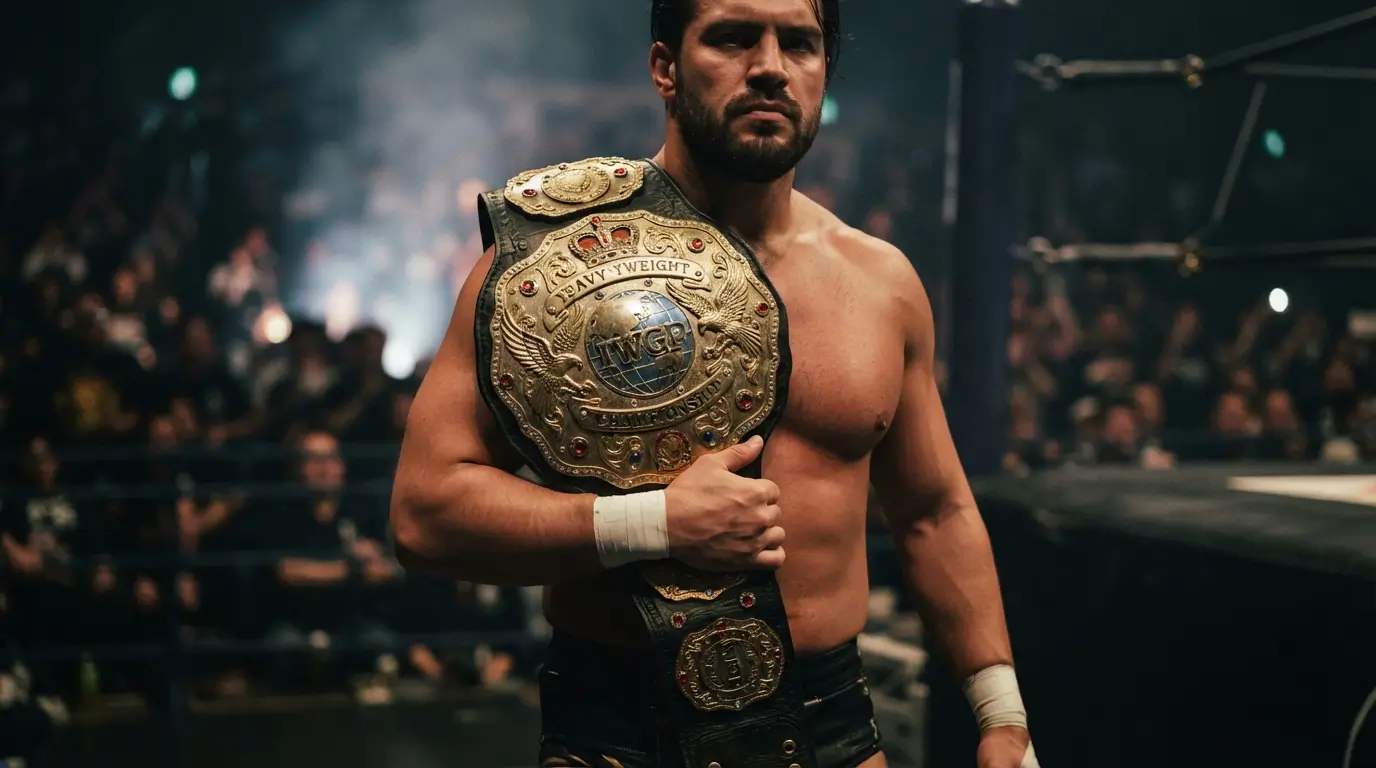
The IWGP Belt is the crown jewel of New Japan Pro-Wrestling — a title with a nearly 40-year legacy, a dramatic 2021 retirement, and a surprise 2026 revival that’s rewriting its story in real time.
The IWGP Heavyweight Championship was established on June 12, 1987, with Antonio Inoki as its inaugural champion. It ran for 34 years before being unified into the IWGP World Heavyweight Championship in 2021 — only to be officially revived as a standalone title again in January 2026, restoring the iconic “V4” belt design fans consider the definitive look of the championship.Here’s the full history, every major design change, and what the title’s future looks like heading into 2026 and beyond.
What Is the IWGP Belt?
“IWGP” stands for International Wrestling Grand Prix, the governing concept behind New Japan Pro-Wrestling’s top singles championship. Unlike titles that change hands weekly, NJPW built the IWGP Heavyweight Championship around scarcity — long reigns, rare defenses, and matches treated as genuine sporting events rather than pure spectacle. That philosophy is a big part of why the belt carries so much prestige among wrestling fans worldwide.
Origins: The Inoki Era (1987)
The championship was introduced on June 12, 1987, when NJPW founder Antonio Inoki defeated Masa Saito in the finals of that year’s IWGP League tournament to become the first champion. Inoki envisioned a title rooted in competitive legitimacy rather than storyline drama, and that ethos shaped how the belt would be defended for decades.The original design was comparatively simple: a large gold centerplate with the championship name engraved boldly across it, paired with a supporting cast of side plates.
IWGP Belt Design Evolution
The 1990s Redesign
As NJPW grew through the early 1990s, the belt evolved alongside it. A more detailed version introduced intricate engravings, a larger centerplate, and NJPW’s now-signature lion motif. Legends like Keiji Muto (“The Great Muta”), Masahiro Chono, and Shinya Hashimoto — NJPW’s celebrated “Three Musketeers” — carried this version through some of the promotion’s most memorable rivalries.
The 2000s Refresh
By the 2000s, NJPW updated the design again, keeping the globe and lion imagery but giving it a sleeker, more polished finish. Side plates were updated to more prominently feature the NJPW logo, reinforcing brand identity as the promotion navigated a turbulent era that included MMA-influenced booking and Brock Lesnar’s controversial 2006 title stripping.
The V4 Era (2008–2021): The Definitive Design
Widely regarded by fans as the most iconic version of the belt, the V4 design carried the title through NJPW’s most celebrated period — the Hiroshi Tanahashi vs. Kazuchika Okada rivalry, Okada’s record 720-day fourth reign, and the promotion’s global expansion under Bushiroad’s ownership after 2012. AJ Styles, Kenny Omega, and Tetsuya Naito all held the title during this stretch, cementing the V4 belt as the visual symbol of NJPW’s modern golden age.
Unification and Retirement (2021)
On March 4, 2021, at NJPW’s 49th Anniversary Show, Kota Ibushi made the final defense of the IWGP Heavyweight Championship, ending its 34-year run. The title was merged with the IWGP Intercontinental Championship to form a new belt: the IWGP World Heavyweight Championship, with Ibushi recognized as the inaugural champion of the unified lineage. The move proved controversial — wrestlers including Naito, Okada, and Jay White publicly felt the individual legacies of both retired titles deserved to continue separately.
The 2026 Revival: What’s Happening Now
In one of the biggest title-history developments in recent memory, NJPW restored the original IWGP Heavyweight Championship as an active, standalone title in January 2026. Yota Tsuji revealed the physical V4 belt at New Year Dash on January 5, then formally proclaimed himself IWGP Heavyweight Champion the following night, calling the World Heavyweight lineage “cursed.” NJPW President Hiroshi Tanahashi authorized the restoration, merging all three historic lineages — the original 1987 IWGP Heavyweight Championship, the IWGP Intercontinental Championship, and the IWGP World Heavyweight Championship — into one continuous history, with Tsuji recognized as the 87th champion.The revived title was also given a clearer identity than before: Tsuji designated it as NJPW’s most protected domestic championship, defended exclusively against NJPW-contracted talent within Japan, while a separate IWGP Global Heavyweight Championship handles international matches on joint cards with promotions like AEW and CMLL.
What’s Next for the IWGP Belt
With the V4 design back in active competition and a clear domestic/international split now in place, the title’s future looks set around two parallel tracks: the restored IWGP Heavyweight Championship building new lineage in Japan, and the IWGP Global Heavyweight Championship expanding NJPW’s reach internationally. For fans and collectors, this means the classic V4 look — long considered “retired” — is once again wrestling’s most current championship design, not just a nostalgia piece.
IWGP Belt Replica vs. Original: What to Know
Original IWGP title belts are one-of-a-kind pieces held by NJPW or its champions — they aren’t available for purchase. Replica quality varies widely across the market, so here’s what separates a well-made one from a cheap version:
| Feature | Budget Replica | Premium Replica |
| Plate material | Thin stamped metal | Zinc alloy or brass, 2mm–4mm+ |
| Strap | Synthetic/faux leather | Genuine cowhide leather, 3.5mm–4mm thick |
| Detailing | Flat printed logos | CNC-machined lion mark, deep etching |
| Customization | None | Nameplates, side-plate engraving |
| Typical price | Under $130 | $150–$250 |
Most quality IWGP belt replicas use zinc-alloy or brass plates between 2mm and 4mm thick on genuine leather straps — enough weight and detail to reflect the real V4 design’s presence without the four-figure price tag some ultra-premium custom builds command.
Shop IWGP Belt Replicas at Custom Championship Belt
If you want to own a piece of this history rather than just read about it, our IWGP Belt collection is built around the design fans know best — the V4 look that’s now back in active NJPW competition. Every belt features zinc-plated 2mm and 4mm metal plates, genuine leather straps, and fully customizable sizing and finishes, so you can display the exact era of the title that means the most to you. Whether you’re a collector chasing an accurate NJPW recreation or a fan who wants a personalized nameplate edition, our team builds each belt with the same attention to detail this championship’s history deserves.
FAQs
When was the IWGP Heavyweight Championship first introduced?
The title was established on June 12, 1987, when Antonio Inoki defeated Masa Saito in the IWGP League tournament final to become the inaugural champion.
Why was the IWGP Heavyweight Championship retired in 2021?
NJPW unified it with the IWGP Intercontinental Championship to create the IWGP World Heavyweight Championship, at the request of then-champion Kota Ibushi, who wanted to hold both belts under a single lineage.
Is the IWGP Heavyweight Championship active again in 2026?
Yes. NJPW officially revived the original IWGP Heavyweight Championship in January 2026, restoring the classic V4 belt design as an active, separately defended title from the IWGP World and Global Heavyweight Championships.
What is the V4 IWGP belt design?
The V4 design was used from 2008 to 2021 and is widely considered the most iconic version of the IWGP Heavyweight Championship. It’s the same design NJPW restored for the title’s 2026 revival.
What materials are used in quality IWGP belt replicas?
Well-made replicas typically use zinc-alloy or brass plates between 2mm and 4mm thick, mounted on genuine cowhide leather straps for an authentic look and weight.
How much does an IWGP belt replica cost?
Quality replicas generally range from $150–$200, depending on plate material, thickness, and customization options like nameplates or engraving.
Conclusion
From Antonio Inoki’s inaugural 1987 reign to the 2021 unification and its unexpected 2026 comeback, the IWGP Belt’s story is still being written — and that’s rare for a championship with this much history behind it. The V4 design fans have loved for over a decade is once again the face of NJPW’s top domestic title, making now one of the best times to own a piece of that legacy.Explore our IWGP Belt replica collection to find the design, finish, and customization that fits your collection.