How To Clean And Maintain A Replica Championship Belt

Learning how to clean and maintain a replica championship belt properly is what separates a belt that still looks sharp after five years from one that dulls, cracks or tarnishes within twelve months. Most of the damage that shows up on a display belt is not from rough handling.
It comes from dust sitting on metal plating too long, oils from hands drying out the strap, or simple habits like folding leather the wrong way in storage. None of that takes much effort to prevent once you know the routine.
Cleaning The Metal Plates The Right Way
Most replica belts are built with zinc alloy plating, which holds up well but still needs a little attention now and then.Start by dusting the plates with a soft, dry microfiber cloth before you use any liquid or cleaning product. Dust particles left on the surface can scratch fine detail work if you rub a damp cloth over them directly, so dry first, always.
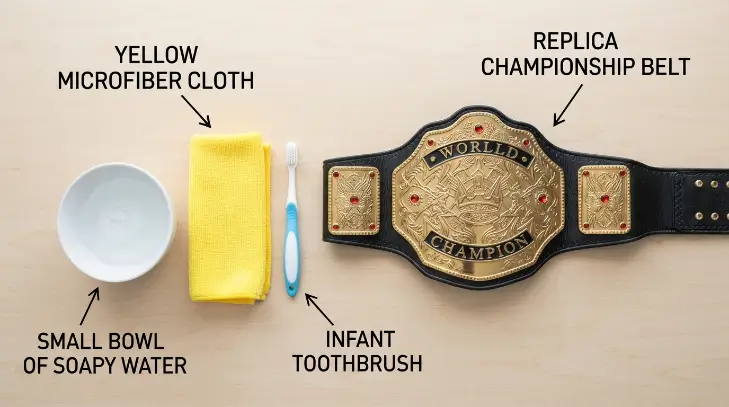
For light tarnish or fingerprints, a barely damp microfiber cloth is usually enough on its own. Dry the surface immediately afterward so no moisture sits on the metal. Avoid household metal polish or anything abrasive, since those products are often too harsh for the thinner plating used on replica belts and can strip the finish or lift enamel detailing.If your belt has enamel filled sections, stick to dry dusting around those areas specifically. Moisture can work its way under enamel over time, and once it lifts, it does not go back down cleanly.
Caring For The Leather Or Synthetic Strap
Whether your strap is genuine leather or a synthetic alternative, it needs different treatment than the metal plates.
- Wipe the strap down with a dry cloth after wear to remove sweat and skin oils, which are the main cause of early cracking
- Condition genuine leather every few months using a conditioner made for accessories, not shoe polish, which can darken or stain the strap unevenly
- Keep synthetic leather away from direct heat, since radiators, car interiors and direct sunlight all speed up cracking and warping
A few minutes of care after heavy use does more for the strap than any deep cleaning session ever will.
Storing The Belt Between Uses
How a belt is stored matters just as much as how it is cleaned.Lay it flat, or hang it on a wide, padded hanger. Folding the strap sharply and repeatedly creates permanent creases that never fully smooth back out. Keep it out of direct sunlight too, since UV exposure fades leather color over time and can dull metal finishes faster than normal handling ever would.
A simple display case or fabric dust cover goes a long way if the belt is not handled often. Even a garment bag works for basic protection. Try to avoid humid spaces like basements or garages, since moisture accelerates both leather cracking and metal tarnish at the same time.
A Simple Monthly Routine That Actually Works
If you want one habit that covers most of what a belt needs without overthinking it, this is the routine worth keeping.
- Dry dust the plates with a soft cloth
- Wipe the strap down with a dry cloth
- Check for loose stitching or loose plate screws
- Store it flat or hung, away from sunlight and humidity
Five minutes a month is genuinely enough to keep a well built belt looking close to new for years.
Common Mistakes That Shorten A Belt’s Life
Most damage I see on belts that come back for repair traces back to a small handful of habits rather than any single accident. Storing a belt in its original shipping box for months is a common one, since cardboard traps moisture and does nothing to prevent the strap from folding into a sharp crease. Once that crease sets into leather, it rarely smooths back out fully, even with conditioning.
Another mistake is treating the plates like stainless steel cookware and scrubbing at stubborn marks with a scouring pad or an old toothbrush. Zinc alloy plating is thinner than people expect, and aggressive scrubbing can wear through the finish faster than years of normal display ever would. If a mark will not lift with a soft cloth, it is usually better left alone than forced off.Leaving a belt near a window for display looks great in photos, but direct sunlight over weeks and months fades leather color unevenly and can leave the strap noticeably lighter on the sun facing side compared to the back. Rotating the belt occasionally, or simply keeping it a few feet from direct light, prevents this without much effort at all.
Signs Your Belt Needs Attention Now
A few early warning signs are worth watching for between your regular monthly checks. A slight green or white haze forming on metal plating usually means moisture got trapped somewhere, often near a seam or screw point, and it is worth drying and inspecting that area closely before it spreads further.
Stiffness in the strap where it used to bend smoothly is another early signal, particularly on genuine leather. That stiffness usually means the leather has dried out more than usual and needs conditioning sooner rather than later. Catching it early is far easier than trying to restore a strap that has already cracked.A loose plate that shifts slightly when you pick the belt up is not something to ignore either. It rarely fixes itself, and continued handling with a loose plate tends to widen whatever gap has formed, eventually leading to a plate that separates entirely.
Start With A Belt Built To Last
Care routines only go so far if the belt was not well made to begin with. If you are still deciding what to buy, this wrestling championship belt buying guide breaks down exactly what to check in materials and construction before you order.Ready to see what a well built belt actually looks like? Browse the full shop here, or take a look at the Stone Cold Steve Austin Signature Series belt as a solid example of the plate and strap quality worth investing in. Buying for a younger fan? Check our sizing notes for kids before placing an order.
FAQs
How often should I clean a replica championship belt?
A quick dry dusting once a month is usually enough for a belt that is mostly displayed. Belts worn more often benefit from a wipe down after each use.
Can I use metal polish on a replica belt?
It is best to avoid household metal polish, since most of it is too abrasive for thinner replica plating and can strip the finish or damage enamel detail.
What is the best way to store a championship belt long term?
Lay it flat or hang it on a wide, padded hanger, away from direct sunlight and humidity. A dust cover or display case adds extra protection if it will not be handled often.
Will a genuine leather strap crack over time?
Genuine leather can dry out and crack if it is never conditioned, but regular conditioning every few months keeps it flexible and prevents most cracking.
Is synthetic leather harder to maintain than genuine leather?
Synthetic leather needs less conditioning but is more sensitive to heat, so keeping it away from direct sunlight and warm surfaces matters more than it does with genuine leather.
Can I wash a replica belt with water?
A barely damp cloth is fine for light cleaning, but soaking the belt or using heavy water exposure can damage both the plating and the strap, so it is best avoided.
Does enamel detailing need special care?
Yes, enamel filled sections should only be dry dusted. Moisture can work its way under the enamel over time, and once it lifts, it cannot be fully repair