WWF Championship Belt Replica: History & Buying Guide

Explore the full history behind the WWF Championship belt Winged Eagle, Big Eagle, and more plus where to find an authentic replica. Before it was the WWE Championship, it was the WWF Championship — wrestling’s original flagship title, carried by everyone from Bruno Sammartino to Hulk Hogan to Stone Cold Steve Austin. If you’re searching for a WWF Championship belt replica, here’s the full design history behind the belt, and what to look for in an authentic-feeling recreation.
The WWF Championship traces back to 1963, when Buddy Rogers became the first champion under the World Wide Wrestling Federation (WWWF) banner. The title went through several major redesigns including the beloved “Winged Eagle” belt (1988–1998) and the “Big Eagle” Attitude Era belt (1998–2002) before the company renamed itself WWE in 2002, effectively retiring the “WWF” name from the title going forward.
What Is the WWF Championship?
The WWF Championship is wrestling’s original world heavyweight title, established in 1963 under the World Wide Wrestling Federation name (shortened to WWF in 1979). It remained the promotion’s top singles championship for nearly four decades before the company was legally forced to rebrand as WWE in 2002 following a trademark dispute with the World Wildlife Fund which is why “WWF Championship” specifically refers to the title’s design and era before that name change.
The Complete WWF Championship Design History
1963: The Original WWWF Title
Buddy Rogers became the first-ever champion in 1963, wearing a comparatively simple design a large gold plate with a globe emblem on a plain leather strap, reflecting the era’s more understated approach to championship belts.
The Bruno Sammartino Era: Multiple Variations
Bruno Sammartino, who held the title for the better part of a decade, wore several different belt variations during his reigns including one unusual design shaped like the 48 contiguous United States. He eventually settled into a more traditional look late in his second reign: a belt featuring two wrestlers grappling above an eagle in mid-flight, a design that carried through the reigns of “Superstar” Billy Graham and Bob Backlund as well.
1972 The First Winged Eagle Influence
In 1972, the WWWF introduced a title that would shape the design language of every WWF belt to follow the first version to feature a large winged eagle as its centerpiece, setting the visual template the promotion would return to again and again over the following decades.
1983 The “Big Gold” Era Belt
As Bob Backlund’s six-year reign (1978–1983) carried the title through the WWWF-to-WWF transition, a new, larger design was introduced in 1983 a bigger gold plate on the belt’s signature green leather strap. This version briefly passed to The Iron Sheik before Hulk Hogan won it in January 1984, launching the Hulkamania era and turning the WWF Championship into a genuine mainstream phenomenon.
1988 The Winged Eagle Championship
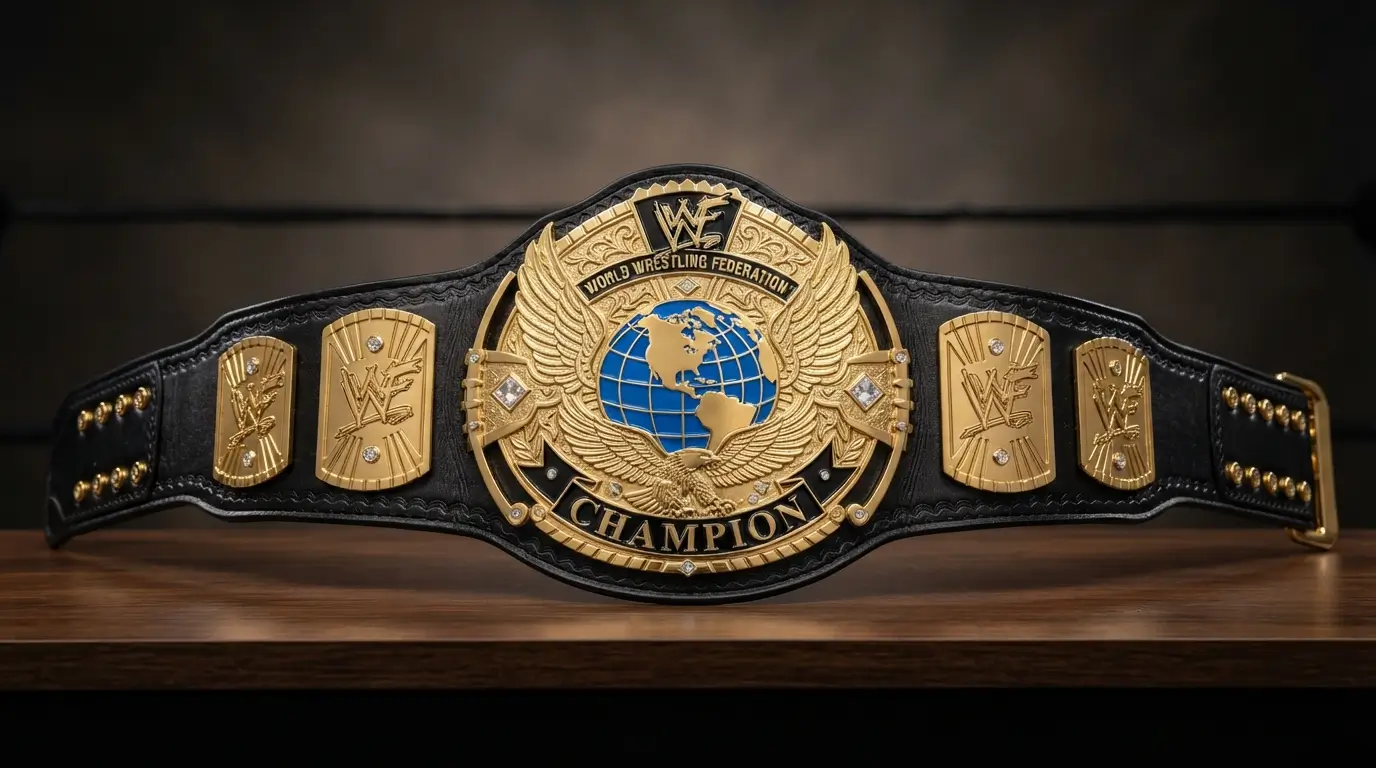
Introduced in 1988, the Winged Eagle design is widely regarded as the single most iconic belt in wrestling history and it holds the record for the longest continuous use of any WWF Championship design, lasting a full decade. It was held by an extraordinary run of legends: Hulk Hogan, Andre the Giant, Randy Savage, The Ultimate Warrior, Sgt. Slaughter, The Undertaker, Ric Flair, Bret Hart, Bob Backlund, Diesel, Shawn Michaels, and Sycho Sid, before Stone Cold Steve Austin became its final holder in 1998.
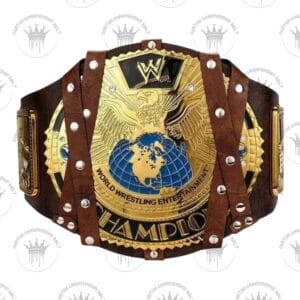
1998The “Big Eagle” Attitude Era Championship
As the WWF entered its edgier Attitude Era, the Winged Eagle design was replaced with a larger, more aggressive belt in 1998 featuring a more prominent WWF logo and a bolder eagle centerpiece, famously debuted by “Stone Cold” Steve Austin. This design carried the title through wrestling’s most commercially dominant period, held by stars like The Rock, Triple H, and Mankind.
2002 The End of the “WWF” Name
Following a long-running legal dispute with the World Wildlife Fund over the WWF initials, the company officially rebranded as WWE in May 2002. While the championship lineage continued under the new WWE Championship name, the “Big Eagle” design worn through 2002 is generally considered the final true “WWF Championship” belt before the rebrand.
Why the Winged Eagle Remains the Most Sought-After Replica
Among collectors, the Winged Eagle design consistently ranks as the most requested WWF Championship replica a combination of its decade-long run, the sheer number of legendary champions who carried it, and its status as the belt most associated with wrestling’s most star-studded era. The “Big Eagle” Attitude Era belt is a close second, popular with fans who grew up during that period specifically.
What to Look for in a WWF Championship Belt Replica
Replica quality across the market varies significantly. Here’s what separates an authentic-feeling recreation from a cheap knockoff:
| Feature | Budget Replica | Premium Replica |
| Plate material | Thin stamped or painted metal | Zinc-alloy or brass, 2mm–4mm thick |
| Strap | Faux leather | Genuine leather, hand-tooled |
| Detailing | Flat printed design | Hand-etched, deep engraving, red jewel/stone accents |
| Customization | None | Nameplates, custom finishes |
| Typical price | Under $130 | $150–$250+ |
Quality WWF Championship replicas typically use zinc-alloy plates between 2mm and 4mm thick on genuine leather straps, closely mirroring the craftsmanship of both the Winged Eagle and Big Eagle eras.
Shop the WWF Championship Belt Replica at Our Store
Whether you’re chasing the legendary Winged Eagle design or the Attitude Era’s Big Eagle belt, our WWE Belts collection recreates these classic designs with the same attention to detail this championship’s nearly 60-year legacy deserves. Every belt we build uses zinc-alloy plates between 2mm and 4mm thick, genuine leather straps, and hand-etched detailing, with full customization available for nameplates or personalized finishes. Whether you grew up watching Hogan or Stone Cold carry this title, our shop lets you own a piece of that history.
FAQs
When did the WWF Championship begin?
The title dates back to 1963, when Buddy Rogers became the first champion under the World Wide Wrestling Federation (WWWF) name.
What is the most iconic WWF Championship belt design?
The “Winged Eagle” belt, used from 1988 to 1998, is widely considered the most iconic design in the title’s history and held the record for the longest continuous use of any version.
Why is it called the WWF Championship instead of WWE?
The company operated as the World Wide Wrestling Federation and later the World Wrestling Federation (WWF) until 2002, when a trademark dispute with the World Wildlife Fund forced a rebrand to WWE — after which the title became known as the WWE Championship.
What’s the difference between the Winged Eagle and Big Eagle belts?
The Winged Eagle design (1988–1998) featured a more refined, elegant eagle centerpiece, while the Big Eagle design (1998–2002) was larger and bolder, matching the more aggressive presentation of the Attitude Era.
What materials make a quality WWF Championship replica?
Well-made replicas typically use zinc-alloy plates between 2mm and 4mm thick, mounted on genuine leather straps with hand-etched detailing.
How much does a WWF Championship belt replica cost?
Quality replicas generally range from $150–$250, depending on materials, plate thickness, and customization options like nameplates.
More Championship Belt Content
Want the story of WWE’s other major title? Read our WWE WHC Belt History guide covering the separate World Heavyweight Championship..
Conclusion
From Buddy Rogers’ 1963 debut to Stone Cold Steve Austin carrying the final “Big Eagle” design before the 2002 rebrand, the WWF Championship’s nearly 40-year run produced some of wrestling’s most iconic belt designs none more beloved than the Winged Eagle. A quality replica lets you own a piece of that legacy, whatever era first got you hooked.