Muay Thai Championship Belts: History & Buying Guide

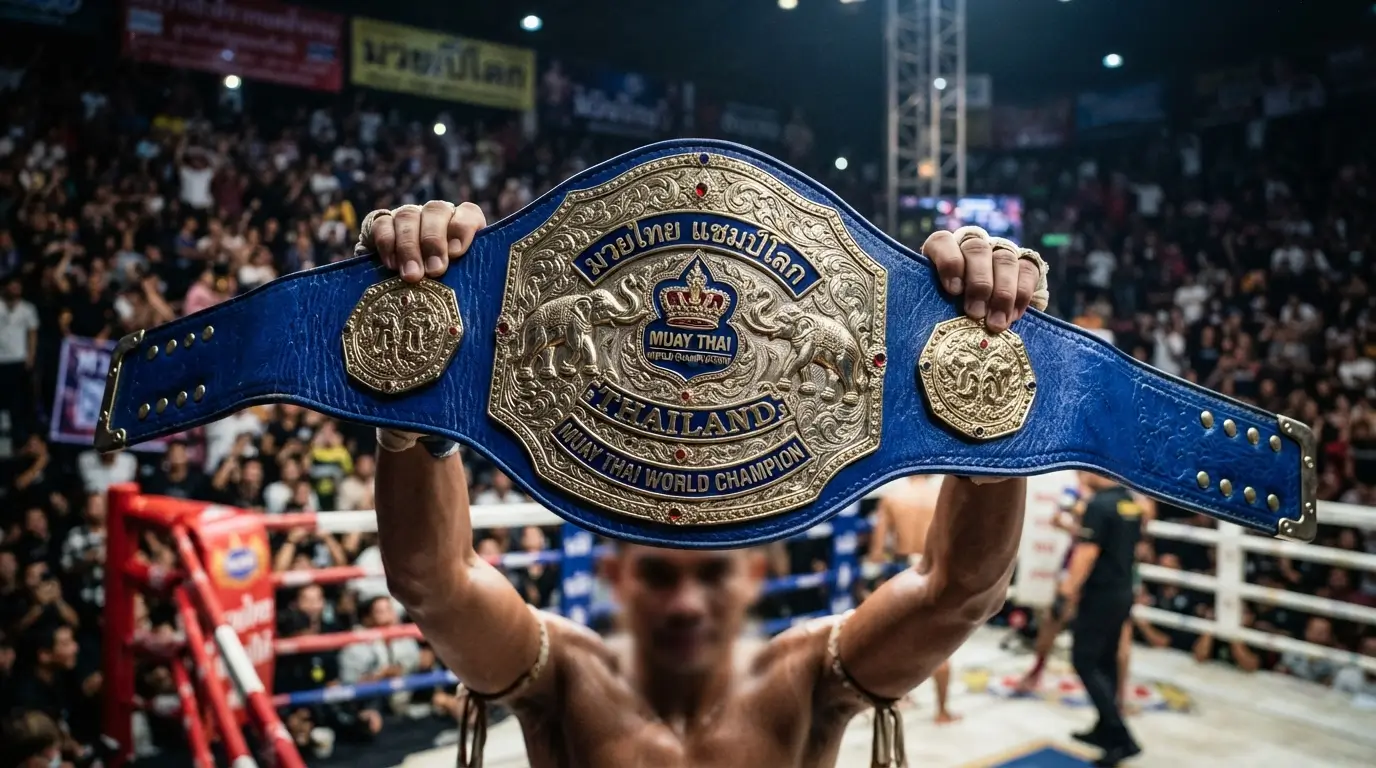
Muay Thai championship belts carry a weight of tradition unmatched almost anywhere else in combat sports — tied directly to Bangkok’s two legendary stadiums and a title system that predates most modern MMA and boxing organizations. Here’s the real history behind them, and what to look for in an authentic-feeling replica.
Muay Thai Custom championship belts USA originated at Rajadamnern Stadium in Bangkok, which became the first venue in the sport’s history to award a physical championship belt, replacing the traditional “SAMAT” victory jacket fighters wore before then. Today, the two most prestigious titles remain the Lumpinee Stadium and Rajadamnern Stadium championships, alongside modern global sanctioning bodies like WBC Muaythai, the WMC, and ONE Championship.
Where Muay Thai Championship Belts Came From
Before championship belts existed in Muay Thai, victorious fighters were honored with the “SAMAT” — a traditional jacket symbolizing their win. Rajadamnern Stadium, which opened in Bangkok on December 23, 1945, changed that by introducing the world’s first Muay Thai championship belt, becoming the first venue in the sport’s history to symbolize a title with a physical belt rather than a garment. Rajadamnern also pioneered Muay Thai’s first formal championship ranking system, setting standards that shaped how the entire sport recognizes its champions today.
The Two Legendary Stadiums
Rajadamnern Stadium
As Muay Thai’s oldest major stadium, Rajadamnern’s championship belt carries a legacy tied directly to the sport’s origins. Its titles span weight divisions from around 100 to 154 pounds, and winning a Rajadamnern belt remains one of the most historically significant achievements a Nak Muay (Muay Thai fighter) can claim.
Lumpinee Boxing Stadium
Opened just over a decade later, on December 8, 1956, and operated by the Royal Thai Army, Lumpinee Stadium quickly became known as the symbol of modern Muay Thai. Its championship system originally covered mini flyweight (105 lbs) up to super welterweight (154 lbs), later expanding to include 160 lb and 168 lb divisions by 2017 as the sport’s international reach grew.
Why Holding Both Belts Matters
Only a small number of fighters in the sport’s history have held both a Lumpinee and a Rajadamnern championship simultaneously — widely considered the single highest honor in traditional Thai boxing. Legends like Chamuekpet Hapalang, who claimed nine total stadium titles (five Rajadamnern belts and four Lumpinee belts across seven weight divisions), and Dieselnoi Chor Thanasukarn, an undefeated Lumpinee Lightweight Champion from 1981 to 1985, remain benchmarks for what it means to dominate both stadiums.
Modern Muay Thai Sanctioning Bodies
Beyond the two historic stadiums, several global organizations now govern professional Muay Thai titles:
- WBC Muaythai — the Muay Thai division of the World Boxing Council, one of the most widely competed-for modern belt systems, with its own detailed weight class structure.
- World Muaythai Council (WMC) — founded in 1995, governing 19 weight classes across more than 130 member nations with standardized, unified rules.
- International Federation of Muaythai Associations (IFMA) — founded in 1993, serving as the amateur pathway into professional competition and pursuing ongoing Olympic recognition.
- ONE Championship — founded in 2011, delivering Muay Thai competition on a major global broadcast platform across more than 150 countries, from strawweight to heavyweight.
What Makes Muay Thai Belt Design Distinctive
Compared to boxing or wrestling championships, Muay Thai stadium belts often incorporate design elements specific to Thai culture and tradition — gold-toned centerpieces, motifs referencing the stadium itself, and a presentation style that reflects the sport’s deep ceremonial roots (Muay Thai fighters traditionally perform the Wai Kru Ram Muay dance before every bout, a nod to the same respect for tradition reflected in the belts themselves).
What to Look for in a Muay Thai Championship Belt Replica
Replica quality varies significantly across the market. Here’s what separates an authentic-feeling recreation from a cheap version:
| Feature | Budget Replica | Premium Replica |
| Plate material | Thin stamped or painted metal | Zinc-alloy or brass, 2mm–4mm thick |
| Strap | Faux leather | Genuine leather, hand-tooled |
| Detailing | Flat printed design | Hand-etched, deep engraving, enamel accents |
| Customization | None | Nameplates, gym or promotion branding, custom finishes |
| Typical price | Under $130 | $150–$250+ |
Quality Muay Thai championship belt replicas typically use zinc-alloy plates between 2mm and 4mm thick on genuine leather straps, closely mirroring the craftsmanship expected of a belt built to honor this level of tradition.
Who Commissions Custom Muay Thai Belts Today
Gyms and Training Camps
Muay Thai gyms increasingly commission custom belts to recognize their top fighters, in-house tournament winners, or standout students — a nod to the stadium tradition, scaled to the gym level.
Independent Promotions and Local Events
Smaller Muay Thai promotions running their own regional or local title fights often need a custom belt design, since they aren’t affiliated with the major stadiums or global sanctioning bodies.
Fans and Collectors
Some fans and collectors want a Muay Thai-style belt purely as a display piece — a tribute to the sport’s history or a specific fighter’s legacy.
Get a Custom Muay Thai Championship Belt Made
Our custom order service builds Muay Thai-style championship belts for gyms, independent promotions, and fans alike — solid zinc-alloy plates (2mm–4mm thick), genuine leather straps, and full customization for your gym’s branding, a fighter’s name, or a custom design tribute. Our engraving team provides a free digital mockup before production, so you see exactly what you’re getting before it’s built.
FAQs
Where did the Muay Thai championship belt come from?
The tradition began at Rajadamnern Stadium in Bangkok, which opened in 1945 and became the first venue in Muay Thai history to award a physical championship belt, replacing the traditional “SAMAT” victory jacket.
What’s the difference between Lumpinee and Rajadamnern belts?
Rajadamnern, opened in 1945, is the older of the two stadiums and originated the championship belt tradition. Lumpinee, opened in 1956 and operated by the Royal Thai Army, became known as the symbol of modern Muay Thai. Holding both titles simultaneously is considered the sport’s highest honor.
What are the major modern Muay Thai sanctioning bodies?
The main global organizations are WBC Muaythai, the World Muaythai Council (WMC, founded 1995), the International Federation of Muaythai Associations (IFMA, founded 1993), and ONE Championship (founded 2011).
Who has won the most stadium championship belts?
Chamuekpet Hapalang holds the record with nine total stadium titles — five Rajadamnern belts and four Lumpinee belts across seven weight divisions.
What materials make a quality Muay Thai belt replica?
Well-made replicas use zinc-alloy or brass plates between 2mm and 4mm thick, mounted on genuine leather straps with hand-etched or engraved detailing.
Can I get a custom Muay Thai championship belt made for my gym?
Yes — custom belt makers can build a Muay Thai-style championship belt for gyms, independent promotions, or personal tribute pieces, typically using metal plates and a genuine leather strap.
More Championship Belt Content
Conclusion
Muay Thai championship belts carry a history unlike almost any other combat sport — born from Rajadamnern Stadium’s decision to replace a ceremonial jacket with a physical symbol of victory, and carried forward through nearly 80 years of legendary champions across Bangkok’s two most storied venues. Whether you’re honoring your gym’s top fighter or paying tribute to the sport’s deep tradition, a well-made replica captures the weight of that history.